
What is electroplay?
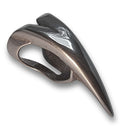
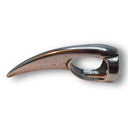
Electroplay is sensation play using controlled electrical stimulation. A violet wand passes a high-frequency, low-current electrical charge across the skin, producing sensations that range from a soft tingle to a sharper spark, depending on intensity and contact point. It is a well-established form of sensation play in the BDSM community, and it pairs naturally with Claws & Clamps Metal Claws.
The reason the pairing works is simple: Metal Claws are electrically conductive. Titanium and aluminium both conduct electricity. When the giver wears Metal Claws and a body contact cable connects their wand to their own body, they become the conductor. Every point of contact with the receiver delivers the electrical sensation. The claw tip concentrates it down to a precise point.
This guide covers which claws are compatible, how the body contact system works and why claws make it better, what to expect from the sensation, how to get started, and the safety considerations that apply to any form of electroplay.
Which Claws are compatible?
Electroplay requires electrical conductivity. That makes it a Metal Claws-only capability. Nylon and Crystal Claws are non-conductive and cannot be used for electroplay.
Yes – Metal Claws
Both metals used in the range are electrically conductive. The titanium range uses Ti-6Al-4V Grade 23 (material conforming to ASTM F136 / ASTM F3001); the aluminium range uses AlSi10Mg / Al6061. All Metal Claws are suitable for electroplay.
No – Nylon and Crystal Claws
Premium Nylon Claws (PA2200 / PA12 material) and Crystal Claws (biocompatible resin) are non-conductive. Do not attempt electroplay with these collections. They are designed for different kinds of sensation play.
Body contact mode: how the system works
How a violet wand normally works
In standard use, a glass electrode plugs into the wand's electrode port. Switch the wand on and sparks exit directly from the glass tip onto whoever or whatever it touches. The wand is the source, and the giver is just holding the handle.
What changes with a body contact cable
A body contact cable (also called a body contact probe, belt holster, or body contact electrode) is a separate accessory you source alongside your wand. It replaces the glass electrode for a completely different mode of play.
The cable plugs into the same electrode port on the wand. The other end has a metal contact point that the giver wears against their skin, typically tucked into the waistband or held in a holster clipped to their belt. Once connected and switched on, the giver's entire body becomes live: they are now the conductor. Electricity flows from the wand, through the cable, into their body, and exits wherever they make contact with the receiver.
What does a body contact cable look like?
The cable is usually a thin, flexible wire with a standard electrode plug at the wand end (to match your wand's port type) and a metal contact point or pad at the other end. The contact point is typically a small disc or rod, and a belt clip or holster holds it against the giver's skin. Some versions integrate the contact pad and holster into a single wearable unit. The specific design varies by manufacturer.
C&C does not supply violet wands or body contact cables. Source them from a specialist retailer compatible with your wand model.
Why the giver's fingers are a problem
Here is the issue body contact creates: when the giver is live and touches the receiver with bare fingertips, the electricity exits through the most nerve-dense part of the hand. Fingertips have the highest concentration of sensory receptors on the body. The result is a noticeable zing for the giver every time they make contact, which quickly becomes distracting and can limit session length.
How Metal Claws solve it
A Metal Claw cups around the end of the finger. The metal band encloses the fingertip, so when the giver touches the receiver, the current routes through the metal ring rather than the nerve-dense skin of the fingertip. The sensation for the giver is significantly reduced.
At the receiver's end, the effect is the opposite: instead of a broad area of skin contact, the current exits through the precise point of the claw tip. The sensation is sharper and more focused than bare-fingertip contact.
The result for both partners: the giver is more comfortable, the receiver gets a more precise and intense sensation, and sessions can run longer.
What does electroplay feel like?
The sensation varies with intensity setting, contact duration, and body location. At low intensity, most people describe a soft tingle or buzz, similar to static electricity. At higher settings, the sensation sharpens into a distinct spark or sting at the point of contact.
Areas with lower nerve density (back, thighs, shoulders) tend to produce a more diffuse sensation. Areas with higher density (inner arms, stomach, neck) are more intense. The claw tip, by concentrating the discharge to a point, amplifies that effect wherever it is applied.
Temperature is also a factor: metal conducts heat, so the claws will take on the ambient temperature of the environment. Pre-warming or pre-cooling them adds a temperature play dimension alongside the electrical sensation.
Getting started
You need: Metal Claws (titanium or aluminium) from Claws & Clamps, a violet wand (sourced separately), and a body contact cable compatible with your wand model (sourced separately). Confirm all connections are secure before switching on.
Read the safety section below before your first session. Electroplay is not suitable for everyone. Run through the contraindications list together with your partner.
Begin with the wand at minimum intensity and establish what level feels good before increasing. First contact is often more surprising than subsequent touches because the nervous system adjusts. Give it a moment.
Start with lower-sensitivity areas: back, thighs, outer arms. Avoid the chest, throat, and head entirely (see safety). Work toward higher-sensitivity areas only once you and your partner have a feel for the intensity at your chosen setting.
Metal Claws can be sterilised after any session involving skin contact. See our Cleaning and Care Guide for the full method. Autoclave, boiling, IPA, or hospital-grade disinfectant are all confirmed effective for aluminium and titanium.
Safety
Contraindications
Do not use electroplay if either partner has any of the following conditions:
- A pacemaker or any implanted cardiac device
- Any other implanted electronic device (cochlear implants, neurostimulators, insulin pumps)
- Known cardiac conditions or arrhythmia
- Epilepsy or a history of seizures
- Pregnancy
- Open wounds, broken skin, or active skin infections in the contact area
If you are uncertain whether a medical condition is relevant, consult a medical professional before attempting electroplay.
Areas to avoid
Always avoid the head, face, throat, and chest or heart area. Do not pass current across the chest (for example, from one arm to the other across the torso). Keep contact away from the eyes.
General practice
- Remove metallic jewellery from the play area before starting
- Keep water and conductive fluids away from the equipment during play
- Establish a clear signal or safe word before starting
- Do not leave a person unattended while connected to active equipment
- Switch the wand off before adjusting connections or removing the body contact cable
- Confirm compatibility of your body contact cable with your specific violet wand device
Cleaning Metal Claws after electroplay
Metal Claws are fully sterilisable, which is one of their key advantages for electroplay. For typical skin-contact play without broken skin, warm soapy water or an everyday antibacterial cleanser is sufficient. If the session involves potential fluid exchange or broken skin, sterilise using one of the confirmed methods: autoclave, boiling, isopropyl alcohol (IPA), hospital-grade disinfectant, or ethylene oxide.
See the Cleaning and Care Guide for full detail on each method and what applies to each material.
Quick reference
| Item | Compatible with electroplay? | Notes |
|---|---|---|
| Metal Claws (titanium) | Yes | Ti-6Al-4V Grade 23. Material conforms to ASTM F136 / ASTM F3001. Fully sterilisable. |
| Metal Claws (aluminium) | Yes | AlSi10Mg / Al6061. Fully sterilisable. |
| Premium Nylon Claws | No | Non-conductive (PA2200 / PA12 nylon). Not suitable for electroplay. |
| Crystal Claws | No | Non-conductive (biocompatible resin). Not suitable for electroplay. |